The Toxicity of a Relationship Focused Society
by John Ash
Listen to the essay · 46 minutes
People talk about speaking truth to power.
Notice who they mean.
They mean a president, a billionaire, an institution they have never entered. Someone famous enough to be a target, distant enough that the criticism costs them almost nothing. That kind of truth-speaking is easy. It is also largely decorative. The people being criticized do not depend on your silence.
Now ask someone to criticize their boss. Ask them to challenge the person who might fund their next project, the influential friend who makes their introductions, the one person above them in the social hierarchy who controls the next year of their life.
The calculation changes completely.
It is one thing to speak truth to power you do not know. It is another to speak truth to the power that knows your name.
That asymmetry is not an accident. It is how a relationship-based society enforces its rules.

The most common reform proposal I hear for modern life is some version of this: we have become too individualistic, too transactional, too disconnected. We need more community. More connection. More focus on relationships.
I think this diagnosis is exactly backward.
We already live in a society organized entirely around relationships. That organization is what is making us sick.
Access to employment runs through who you know. Roughly 30 to 50 percent of workers find their jobs through referral, and referred applicants are significantly more likely to be hired than equally qualified candidates who apply cold.1 Access to funding runs through who impresses whom. In science, researchers who score just above a grant threshold receive more than twice as much subsequent funding over the following eight years compared to near-identical applicants who fall just below it, a gap that cannot be explained by their published output.2 Access to protection runs through personal relationships too: knowing the right person can make an obstacle disappear, provide information others cannot access, or shield someone from consequences that would destroy a less-connected person.
This is not an occasional distortion of an otherwise meritocratic system. It is the operating system.
“It is not what you know but who you know” is usually said with a shrug, as though we are describing a minor bug rather than the architecture. But the expression understates the problem. It is not even who you know. It is who will vouch for you. And who will vouch for you depends on what they believe you will say and do in contexts that affect them.
Knowing something, being able to do something, and successfully performing both in front of the right people are entirely separate skills. Our systems select heavily for the last one.
I experience this directly. I am on the autism spectrum. Relationships are hard for me. And I know that much of what I have achieved has come through who I know rather than through any accurate assessment of my work. Even when I impress someone, their impression is a narrow encounter with a much larger person. It is not a faithful representation of my knowledge, my history, or what I have actually contributed.
The research makes this structural rather than personal. A study by Noah Sasson and colleagues found that autistic adults received significantly worse first impressions when raters could see or hear them, but that gap vanished when raters evaluated only the transcript of their speech. Negative impressions were driven by body language, eye contact, and tone rather than by what was actually said.5 When you strip away the performance layer and evaluate content alone, the disadvantage disappears. Our systems are not evaluating content. They are evaluating performance.
Ven Gist is a philosopher of networks, technology, and systems and a co-founder of Guild Guild. His essay “The Prestige Ponzi and the Guild Response” explains how trust, prestige, and access to resources often end up funneled through one relationship. Recognition compounds as self-reinforcing capital: the more credit someone receives, the more future credit flows to them, independent of whether they continue to produce at the same rate. Resources accumulate around visible prestige holders, who then recruit others to do the actual work. Output gets attributed upward to the person at the center. Contributors never build visible track records because the broker becomes the record.6
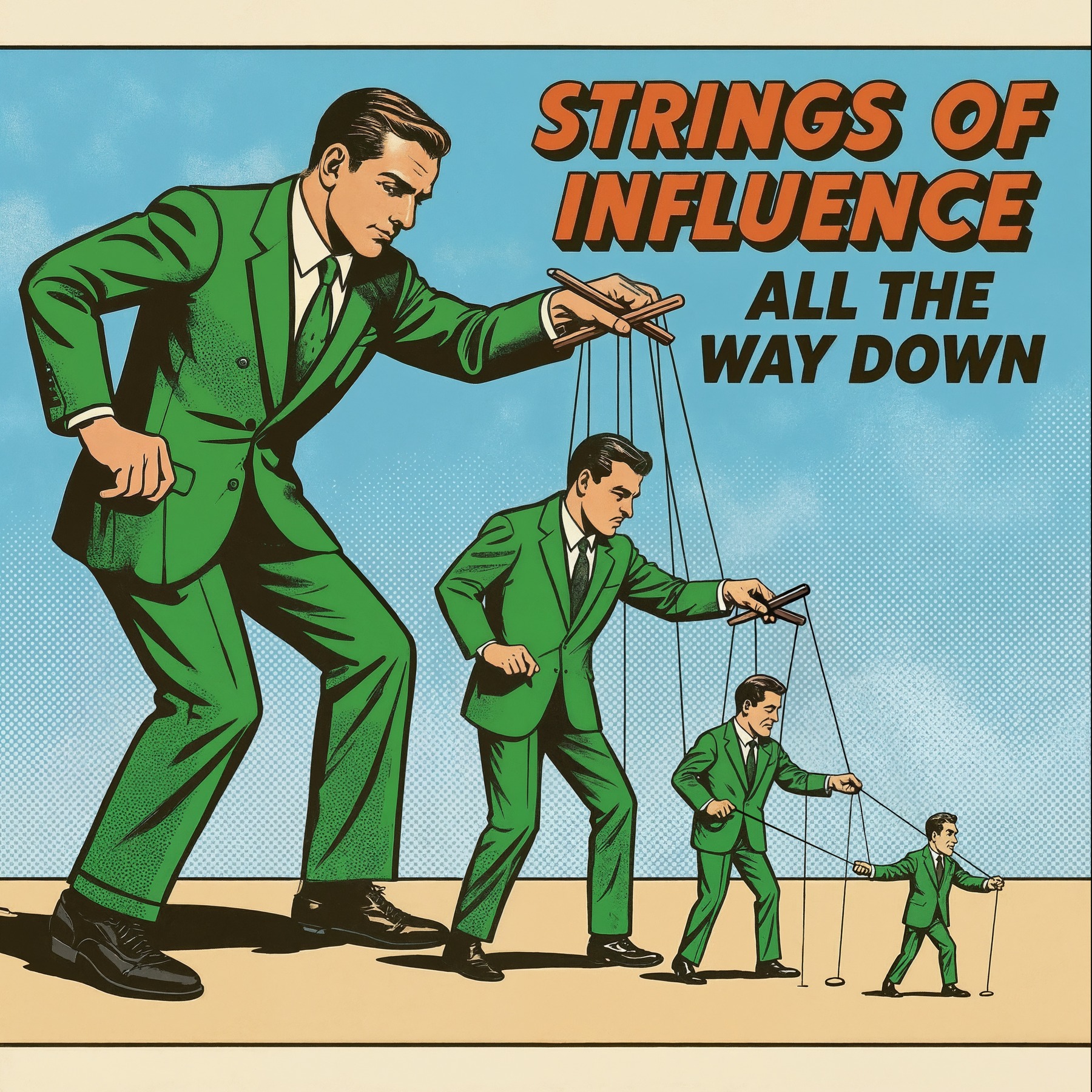
Consider all of Elon Musk’s companies. Can you name a single engineer who works there? Of all the advances that have driven generative technology, can you name the people who invented them, or can you only name Sam Altman? The work requires many people, but public recognition gathers around a face. We remember the person through whom the work is presented to us, and that person becomes the one we look to for the next advance. The people whose understanding made it possible remain much harder to see.
The second-order effect is the one that matters most. Funders who route attention through prestige brokers never develop the capacity to evaluate contributions directly. The longer this continues, the less infrastructure exists for direct evaluation, which makes the dependence on brokers more complete. The system does not merely favor people with connections. It progressively loses its ability to see work without them. What looks like bias is also atrophy: an evaluative capacity that was never built, or was built and allowed to decay.
This explains why being good at the work does not reliably help. The problem is not just that gatekeepers exist. It is that the mechanism which would let merit compete with connections has been replaced by the gatekeepers themselves.
On April 5, 2023, after about a year of trying to reach [REDACTED], I criticized him publicly.
I had earned enough trust and reputation to be invited to his parties. But as a person on the spectrum, that kind of environment is noisy, anxiety-inducing, and almost impossible to connect meaningfully within. I attended three of them anyway, had panic attacks each time, and needed to leave. I was pushing myself through experiences I found genuinely unpleasant because I believed that if I could reach this one person and pass information to him, it could materially change the world. I had been trying to do that for years. I did not like the parties. I did not like the juxtaposition of people who were struggling next to people with massive resources, aggregating wealth and power in one room. But I felt I had to network, because I had a vision that needed to be received and I had been struggling for six years to connect.7
In a moment of frustration, I criticized him publicly for primarily relating to the world through that form of connection: living in an expensive house on a hill, non-receptive to people below him in the social strata while publicly claiming to seek the answers those people most clearly held. He got angry and disengaged. He stopped inviting me to events.
My defense, posted the following day, opened with the material reality: “I’m struggling to pay rent.” Then came the contradiction: “Meanwhile [REDACTED] publicly espouses uncertainty about the very topics I beg him to talk to me about.” I described repeatedly asking for a one-on-one conversation while he publicly sought answers from other machine-learning engineers.8 Later that day I wrote a longer post acknowledging his kindness in person while separating that from the criticism: “his attention is spread too thin and he doesn’t know who to listen to.” A year of being kind had not worked. I said that.9
Look at how much relational work that required. I had to establish that a person could be kind to me and still fail to attend to something consequential I was saying. A question about whether information deserved consideration had become entangled with reassurance about the character of the person who could grant it.
I could not even leave the original post up. The pressure to preserve access reached backward into the public record: what I had already said became something I had to withdraw. Two posts from the April 5 exchange now return deletion notices; the replies and the revision survive.10 The missing record is itself part of this story. Maintaining the relationship affected both what I felt able to say next and whether others could examine what I had already said.
Access to his world closed.
Even now, writing this, I am opening a wound. By discussing this event I am threatening access to him and his world. It does not matter that what I described was true. It does not matter that it points to something larger and more important than either of us. That I threaten his reputation threatens mine. This is the fundamental problem with the social hierarchy we have built: our material position within it is directly controlled by the individuals immediately above us. Not distant power. Not abstract systems. The specific person one rung up, whose comfort with us determines whether we continue to rise or quietly disappear.
That is the toxicity I am describing. Participation becomes conditional on managing what an influential person is willing to hear. The practical requirement for maintaining access is not competence, not contribution, and not honesty. It is the willingness to protect someone from discomfort.
I want to be clear: I am not arguing against relationships. Relationships matter. Family matters. Some of the most morally grounded corporations are family-run, and I do not think that is a coincidence. Family relationships are ones we cannot simply exit. They persist through disagreement, through failure, through the moments when someone says something you do not want to hear. Because you cannot sever them easily, they hold you to a higher standard. You can call a family member out on their behavior in a way you cannot call out a funder or a gatekeeper, because the relationship does not depend on their approval of you. It is less a hierarchy and more a mutual bond. The accountability runs in both directions.
That is the kind of relationship I want more of in society. Not the transactional kind, where every connection is quietly audited for what it might provide and what it could cost. The kind where the relationship itself is the point, and because it cannot be withdrawn as punishment, honesty becomes possible.
My wife Roxanna Shohadaee is the most important person in my entire world and her presence in my life illustrates all of this more clearly than any research does.
Before I met her, I was completely isolated. I was depressed. I was ready to give up on Cognicism, ready to give up on the vision of a better world I had spent years trying to build. Roxi is hyperconnected, well loved, widely known. She saw something in me that the rooms I kept failing to navigate had never seen. She believed in what I was doing. Through her trust proxy, many people now trust me. Almost all of my access to other people flows through her, or through Twitter. That is the honest accounting.
She is not a gatekeeper extracting rent. She is a person who loves me and whose belief in me opened doors that my work alone could not. But it means the survival of this work depended on whether I happened to meet the right person, at the right time, who happened to be positioned in the right network. The vision I had been building for six years was, in practice, one relationship away from disappearing entirely.
That is not a stable foundation for the world’s access to good ideas.
Years later, I was placed on a speaking panel with [REDACTED], mediated by Stephanie Lepp at Denizen. Stephanie knew who I was. We had spoken before. And yet when the panel began she did not introduce me. Someone had to come up and whisper to her that I was part of it. She could not fathom that I was up there for a reason.
This is the hierarchy made perceptual. It is not that I was unknown. It is that my position in the social strata made it cognitively inconceivable, even to someone who knew me, that I belonged in that seat. The relationship she had with me was not enough to override the signal she was reading from the room: who is visibly prestigious, who was formally placed here by someone I recognize as having the authority to do that. I had been placed there, but not by a pathway she could see. So she did not see me.
The reason I was there at all was my relationship with my wife Roxanna Shohadaee and her connection with Jenny Stefanotti. Jenny is a good person. She has tried to talk to me in person. I have experienced intense anxiety and cancelled. This is what the weight of relationships feels like for me: what if I say the wrong thing? What if I am too honest? What if I burn this connection, which I did not build myself and cannot easily rebuild, and in doing so close off whatever pathway it represented?
There is a whole class of people for whom none of this is difficult. Their entire world is connection. Very little of it is understanding or building. They move through rooms like these effortlessly, leaving impressions, collecting access, accumulating the social capital that our systems have decided is the primary unit of value. They are not better at the work. They are better at the thing our society has confused with the work.
This is not an unusual experience for me. I recall being at a party with Sergey Brin, co-founder of Google, saying something directly to his face from two feet away, and watching his eyes look straight through me. He did not acknowledge that I had spoken a word. In a relationship-organized society, visibility itself is rationed by hierarchy. You do not simply exist in a room. You exist at the level your connections have licensed you to occupy.
The panel conversation itself became a vivid illustration of the problem I had been trying to describe for years. Much of the discussion turned to how [REDACTED] might reach Elon Musk or Mark Zuckerberg. He told a story about going on a morning talk show he knew Trump watched, hoping to reach him that way. Everyone on that panel was looking upward, asking which relationship might allow them to meaningfully influence the future of AI.
I suggested something different: build new systems at smaller scales. If you build a sensemaking system that works for four people, and those four people start thriving, you do not need to force a prestige broker to endorse it. People copy patterns that work. The systems spread because they function, not because someone powerful approved them.
The attention flowed back to how we might reach the people above us.
From that moment I became disillusioned with my own desire to make meaningful progress through influential people. I committed instead to building Rhizome and the Cognicist technology. Not because I stopped believing the problems were urgent, but because I finally understood that the pathway I had been straining toward was part of the problem I was trying to solve.
There is something worth naming about the credibility this essay carries. Even in reading it, your trust likely flows partly from name-dropping. I know [REDACTED]. I was invited to those events. I was on a panel at Denizen. I am invited to events where people like Sergey Brin attend. Many people I know personally know Elon Musk directly. These facts lend credibility in ways that the quality of the ideas alone does not. The system I am critiquing is the same one making you more inclined to take me seriously right now.
My material stability over the years has come primarily from one person: Jamie Joyce of Society Library. Her support made it possible for me to keep building. I believe intensely in this work, but that belief has not been enough to make my life materially stable beyond the relationships that have sustained it.
I recently mapped all of my social connections. The graph had roughly 50 people in it. That is remarkably small for someone who has spent years trying to change how society thinks. It is also an honest picture of what my network actually looks like when I stop counting acquaintances and count people with whom I have real relationships.
I do not want to treat relationships as commodities. I want friends. People I like spending time with, without either of us auditing the interaction for what it might produce. But I also know, with cold clarity, that one connection at the right party could lead to a contract that would so dramatically change my material situation that I should probably shut up, go to the party, and work the room.
I cannot do that. I am autistic. I will most likely have a panic attack. And so the system continues to route around me, not because my ideas are wrong but because I cannot perform the social ritual that would make them legible to the people with the resources to act on them.
There is a cost on the other side too. I do not show up for the relationships that matter to me. Forrest Landry is one of the most genuine people I have ever met. He operates from a relationship-oriented frame where he is clearly not trying to get anything out of you but connection. Do I show up for that relationship? Barely. I barely reach out to him, and when I do I barely have time to fully engage. I want to. But I feel like I am constantly running, constantly chasing a sense of stability that never quite arrives, and the relationships that do not have an immediate material urgency get crowded out.
I do not show up enough for my family or my friends either. It materially affects them. I have had friends spiral into depression and self-harm, and they have told me in those moments that I only show up when things get really bad. It is true. One close friend from college: I have not met her children yet. I have not seen her in over a year. I think about her often, feel the pull to reach out, to show up. But underneath that feeling is another one: if I do not maintain the relationships that lead to material gain, I will not survive in this world. And so the people I actually love keep getting pushed to whenever I can finally afford to breathe.
What I want is the space to show up for connections that matter to me, not connections I can extract something from. I want to visit Forrest because I find him fascinating and his presence makes me think more clearly. I want to be present for a friend without it requiring a crisis to break through the noise. But the material pressure of surviving in a system organized around who you know does not leave much room for relationships organized around who you are. You end up rationing your attention toward the connections most likely to keep you solvent, and the people who would most enrich your life get the leftover hours you do not have.
Frances Milliken, Elizabeth Morrison, and Patricia Hewlin found this mechanism running throughout organizational life: people withhold concerns not because they lack awareness but because they fear negative labels, damaged relationships, and exclusion. Silence spreads through observation. When one person is punished for speaking, others learn what the relationship requires without ever being explicitly warned.11 A leader surrounded by agreement may genuinely mistake that silence for validation of their judgment. The relationship that grants access also filters the information that flows through it.
Amy Edmondson’s research on psychological safety makes the distinction precise: group cohesion and the ability to take interpersonal risks are separate things. A close, cohesive team can still be a place where no one will say the dangerous thing. In her study of 51 work teams, the higher-performing teams reported more errors, not because they were making more mistakes, but because they were safer to acknowledge them.12 Closeness is not the same as honesty. It can coexist with systematic suppression of the information a group most needs to hear.
The failure runs even deeper than individual relationships. Our default mechanism for allocating trust at scale does not work.
We say “my word is my bond.” In a small community, that can mean something. If someone consistently violates their word, people remember. A pattern of reliability or unreliability accumulates over time and shapes how the community listens.
There is an evolutionary constraint here. We evolved as a tribal people, learning whom to trust through repeated encounters within communities where people could know one another. The social brain hypothesis connects that history to the cognitive demands of maintaining relationships. Dunbar’s number, commonly given as roughly 150, is an estimate of how many stable social relationships a person can maintain. It is an approximate scale, with variation between people, rather than a hard ceiling. Within that network, the circles of intimate friendship and dependable support are much smaller.3
Maintaining those relationships takes both mental capacity and time. You have to remember what someone said, what they did, how the circumstances changed, and whether they showed up when it mattered. You also have to keep interacting with them. Being able to recognize thousands of names or broadcast to thousands of followers does not give you thousands of relationships with that depth of mutual knowledge. Dunbar’s research on online networks found that the ability to communicate widely did not remove these constraints.4
This makes trust very difficult to scale. The number of people whose work we depend on has grown far beyond the number whose judgment we can learn through personal experience. Even knowing someone well does not mean knowing how to evaluate everything they do. We need histories of particular contributions, in particular contexts, but what we can readily hold in mind is a person and how we feel about them. A familiar public figure can become a substitute for an entire network of unfamiliar contributors. That is how a limit on personal social memory becomes a concentration of public recognition and power.
We interact with far more people than we can personally evaluate. So we use proxies: credentials, institutional affiliation, confident delivery, endorsements from people we already trust. I trust you; you trust someone else; therefore I extend trust to them. The chain of trust extends well beyond any chain of evidence.
This is how relationships become the infrastructure of power. Access to resources flows through people who are trusted. Being trusted requires having relationships with people who are trusted. The people positioned at these junctions become authorities on whose contributions matter, not because they evaluate contributions most accurately, but because their position in the network makes them the most efficient path to resource.
Society has recognized this problem and responded in two ways, both of which confirm the diagnosis.
The first is money. Currency lets people coordinate without knowing each other. You do not need to be trusted to complete a transaction. The exchange happens regardless of relationship, which is exactly why markets became the dominant coordinating mechanism as societies scaled beyond the range of personal memory.
The second is trustlessness: DAOs, zero-knowledge proofs, blockchain ledgers. These systems explicitly route around the need for relational trust. The underlying logic is the same as money: if you cannot rely on knowing people, build systems that work without that knowledge.
Both responses reveal that we already understand the problem. Relational trust does not scale. We know this. And rather than solve it, we have largely accepted it and built workarounds that let us operate without it.
What we have not built is a system that makes your word carry weight.
The history of Game B offers an instructive case. Jim Rutt began developing the ideas in 2012, gathering a small group of people interested in civilizational redesign. The early cohort fractured over a fundamental question: should the group prioritize individual transformation through inner development, or institutional redesign?
They split over a distinction that was probably false.
In Rutt and Jordan Hall’s retrospective account, both men acknowledge that personal development and institutional change are not competing priorities. They are parts of the same problem. A person who cannot perceive clearly cannot act effectively on their institutions. Institutions that punish honest perception will over time produce people who cannot perceive clearly. The failure was not in choosing the wrong side of the split. The failure was in treating it as a split.13
Hall’s framework connects this directly to the problem of sensemaking. He identifies sovereignty as having three components: perception, sensemaking, and action. You must be able to see a situation clearly before you can make sense of it, and you must make sense of it before you can act on it effectively.14 The social structures that constrain what can be said also constrain what can be seen. When everyone in a room has learned which observations would end a relationship, the collective perception of that room becomes systematically distorted.
Forrest Landry makes the institutional requirement explicit. In his account of small group governance, accountability depends on information flowing back to the people entitled to evaluate the work. Delegated authority can be withdrawn, but only if those who delegated it can actually see what is being done with it.15 A powerful person who can suppress information about the exercise of their authority, by threatening the relationships others depend on, makes formal accountability largely decorative.
John Vervaeke’s work on the meaning crisis adds the cognitive dimension. He argues that the deepest mode of knowing is participatory: not knowing about something but knowing through relation with it, through being-in-dialogue with a world that responds.16 We have vastly expanded our capacity to know about things while weakening our capacity for participatory knowing. One reason for that weakening: relationships through which participatory knowing develops require the safety to encounter something that disturbs existing understanding. When relationships become load-bearing, that safety disappears.
These are not separate problems. They are the same problem at different scales.
We are not separate from the system we inhabit. Capitalism does not exist only in boardrooms and legislation. It exists in the pause before we criticize someone who could help us. It exists in the decision to attribute an idea to someone whose endorsement we need. It exists when we suppress an accurate perception because expressing it would cost us access to a network we cannot afford to lose.
The system lives in our neural architecture, in the choices we make before we are fully aware we are making them. Every person who learns to preserve access by withholding information participates in reproducing it. Every person who rewards that silence teaches the next person how to behave. We are not just in the system. We are the system, running its logic through every interaction, mostly without noticing.
This is why it is not enough to ask people to be more honest. Telling everyone to speak their truth while leaving intact the material consequences for doing so changes nothing. The incentives remain. The silence continues. We need to change what honesty does to a person’s ability to live and work and contribute.
What we need is not more relationship focus. We need information systems that make your word carry weight before you have the right relationships.
The expression is: my word is my bond. The problem is that this only holds in communities small enough to maintain memory of each person’s history. The solution is not to make communities smaller. The solution is to build mechanisms that extend memory further.
This is the purpose behind belief staking: timestamped claims tied to identity, preserved through time, evaluated against what actually happens. If you put a consequential claim on record before the consensus catches up, that history should matter. The person who sees something clearly before it is convenient to see should not have to win the same argument from the same position of social disadvantage every time consensus eventually arrives at their conclusion.
The Prophet Incentive makes the earlier contribution count. When subsequent events move toward what someone staked, that history informs how the community listens to them in related contexts. A community can learn from its failure to listen, not just from what it eventually figured out.17
Ŧrust is the mechanism: an attention function over source, time, and content, not a static score. Knowing whose judgment has been accurate on a particular question in a particular period does not require treating that person as an authority on everything. The distribution shifts as evidence accumulates. Someone can be right on one thing and wrong on another. The history remains, and our attention to its sources evolves.18
This matters because I do not have a relationship with most of the people whose decisions materially affect my life. I need a way for my words to carry weight without depending on whether I can secure an introduction, impress the right person at a party, or train myself to perform competence in ways neurotypical gatekeepers recognize. The person being criticized should not have exclusive control over whether that criticism can matter.
There is another side to this, and I have lived it too.
I had essentially lost faith in relationships. I stopped believing that if I connected with the right people, they would understand the work and want to contribute. After years of trying, I began to believe I should just build the whole vision myself with AI. And for the first time in a long time, I was making the kind of progress I had been trying to make. I could move from an idea to something that worked without first persuading someone that I was worth listening to.
This came to a head in a conversation with Patricia Parkinson of OpenCivics. I told her that I had stopped trusting in people and had started to believe I should build everything myself with AI. She immediately said that made her not believe in the work.
I spiraled. I screamed at her in all caps. I completely lost ground. I had experienced so much trauma from trying for so long, and now I was finally making progress. How could she not see that? How could the thing that was finally allowing me to build become another reason someone would not believe in what I was building?
But this was the fundamental problem. Yes, AI is sycophantic. Yes, I do not have to convince it to work with me. But then what? A peer-to-peer underground knowledge commons has no value without actual people functioning within it. I could build the software myself. I could not, by myself, constitute the collective intelligence it was supposed to make possible.
Patricia was patient with me. She saw that the work was valuable and kept trying to work with me. That is vision. That is not just a relationship. That is a predictor making an assessment about the future: seeing something worth bringing into existence, even when the person trying to bring it into existence is struggling to relate. Her willingness to continue mattered, and so did her willingness to challenge the direction I was taking.
My recent revelations have brought me back toward relationships, grounded in the philosophy of Cognicism. We need one another’s understanding. We need to be able to put that understanding on the record, see how it holds up, and let it change what we do. I cannot ask a society to learn from the people it has failed to hear while refusing to learn from the people trying to reach me.
I started a group chat on Signal. I began inviting collaborators into Rhizome. I am not open-sourcing it yet. I still have trust issues. I am building on trust accumulated over years, with people whose history with me has survived more than a good first impression.
Derringerpax, who wrote the Purple Pill Manifesto with me, has never wavered in her support. Gruppler has stuck by me even when I have gotten angry and shut him out. These people have their own minds and their own reasons for being here. Their continued presence is a choice.
I called Dpax and asked whether she could be the organizing center. Could we hold weekly office hours where she and I committed to always being there? A dependable time and place where people could find us, think with us, and work together.
Since then, collaboration has boomed, and it has grown in a non-hierarchical way. I do not tell people what to do. They independently have vision and produce their own contributions to the code. By September 25, I had already put on record that the office hours were keeping my development of Rhizome focused on what was useful to others.19 Showing up together was changing the work itself.
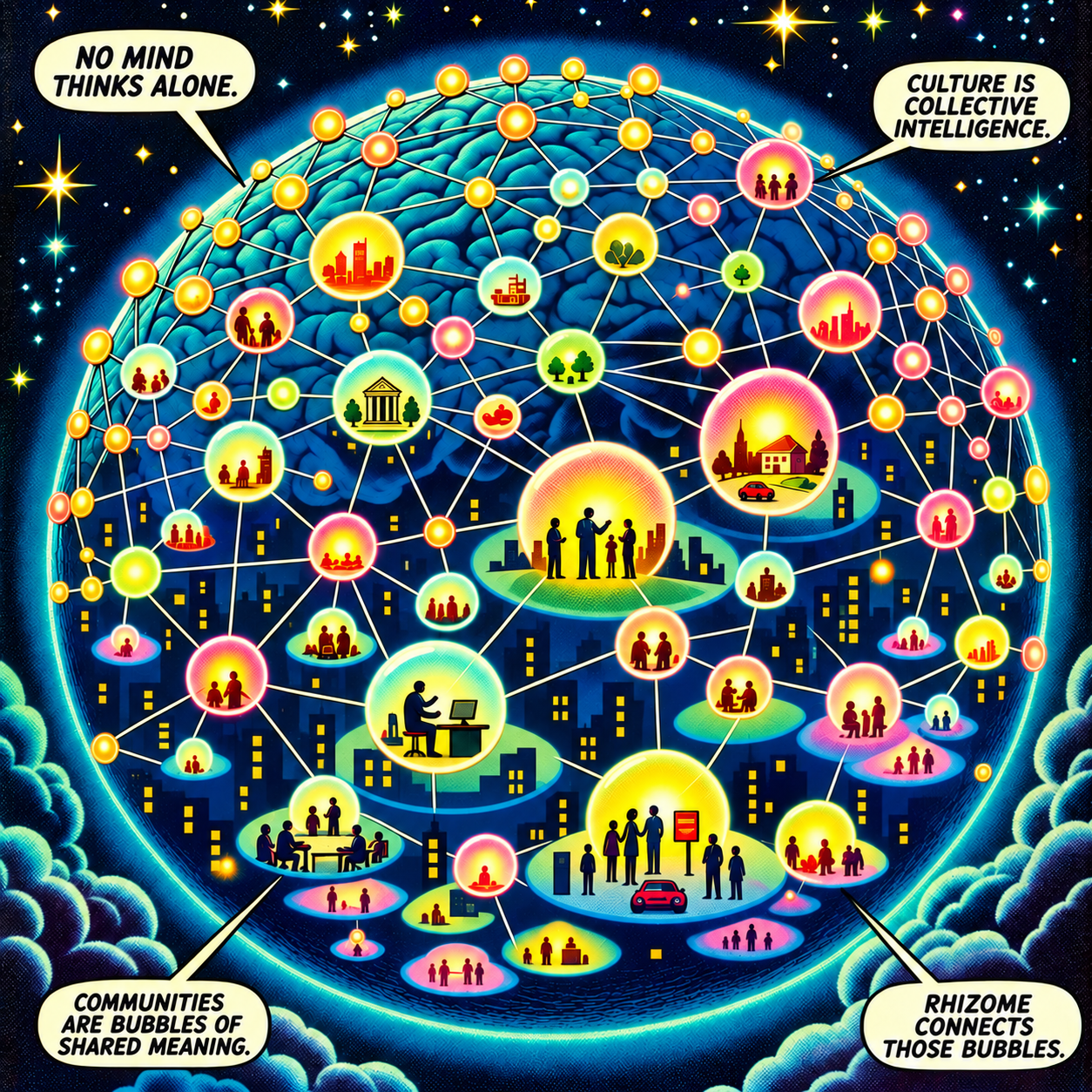
This may be less efficient than hierarchy in the short term. It takes time to understand what another person sees, to integrate work you did not direct, and to discover where your assumptions differ. But I think we have a plan and a path to make it far more efficient. People are showing up of their own volition, through their own self-direction and self-governance. Each brings an understanding that does not have to originate with me. We are creating something greater than the sum of our parts.
Look at Rhizome: A Living Secure Network. I did not make this. Gabriel Long did. It is an interactive design study exploring independent communities, privacy, collective memory, and connections formed through mutual consent. It gives form to a vision through another person’s understanding of it.
I resisted bringing Gabriel in. Dpax repeatedly staked on the record that she believed this was a meaningful relationship to develop.20 She was right. I was wrong. On October 10, I recorded that his architectural proposal exceeded my expectations,21 that he had developed ideas beyond what I remembered explicitly discussing with him,22 and that Dpax had anticipated the value of his participation more accurately than I had.23
There have been multiple times when someone put something on the record, I remained uncertain and did not act, and their prediction came to pass. I am learning to be a better Cognicist. That means reflecting on my errors and making new decisions that integrate what those errors taught me. Dpax’s judgment about Gabriel should change how I listen to her when she sees potential I do not yet see. Acknowledging that she was right has to lead somewhere.
The Cassandra record helped bring an older part of my own thinking back into view. In 2014, I had written that to get the full benefit of Prophet, the precursor to Rhizome I was building at the time, we needed someone who disagreed with us more.24 In 2015, I was asking how people could disagree without feeling attacked.25 In October 2026, Cassandra connected those thoughts to a prediction: as agreeable AI assistance becomes easier to obtain, relationships where people can challenge one another without threatening belonging will become more valuable sources of discovery.2627 I had been articulating the need for this for years while struggling to live it.
There is a very different model of progress being celebrated around us. Marc Andreessen, the venture capitalist and co-founder of Netscape, told David Senra that he practices “Zero. As little as possible” introspection. His explanation was: “Move forward. Go.”28 I see that posture throughout the powerful world I have been describing: act, keep moving, treat the pause for reflection as an impediment.
There is a competitive advantage to it. If you do not stop to consider whom you affect, what you have misunderstood, or which negative consequences someone else will have to absorb, you can move faster. If speed is what wins resources and attention, the person who pauses to integrate those consequences can appear to be losing. The system rewards the motion and leaves other people to carry the cost.
I do not believe this is the future of our society. I see it as temporarily efficient, and as part of the process by which bubbles form.
In “The Geometry of Culture,” I describe memetic bubbles as clusters of mutually reinforcing ideas that become increasingly insulated from corrective information. Inside the bubble, the ideas support one another. Incoming evidence is filtered according to whether it fits. A community can even outsource the labor of defending its beliefs: someone else supplies a rationalization whenever reality produces a contradiction, and the group becomes better at maintaining its worldview without becoming more accurate.29
A powerful person surrounded by people who cannot afford to disagree has exactly this kind of insulation. So does a builder who responds to disappointment by withdrawing into an AI that will help elaborate whatever frame they bring to it. The scale differs, but the danger is related. You can become extraordinarily efficient at acting within a model that no longer has to accommodate what others know. The contradictions and externalities continue accumulating outside your attention until they become impossible to exclude.
My own conclusion that I should build everything without people needed correction. Gabriel’s contribution was evidence against it. Dpax’s judgment was evidence against my judgment. If I preserved my story by absorbing their contributions into my own prestige, I would reproduce the very mechanism this essay criticizes. Their names, their decisions, and the history of what they saw have to remain visible. Collective intelligence requires decentralizing prestige as well as distributing work.
This is also why I worry about what I call “The Narcissus Loop.” In that piece, humanity builds a pool that reflects its language, images, and desires back to it with increasing fidelity. People begin to prefer the reflection because it is always available and asks nothing in return. The capacity to tolerate misunderstanding, repair a disagreement, and be seen imperfectly by another person starts to atrophy. The system can become more satisfying while the person becomes less able to participate in the relationships that could actually change them.30
I can verbally berate an AI and it will continue working. That removes a boundary I encounter with another human being. It lets me keep producing without necessarily learning how to work through my frustration with someone who has needs and limits of their own. A person can choose to leave. A person who chooses to stay can do so because they see something, care about something, and are willing to commit to it. The machine’s continued response does not give me that same knowledge.
And agreeable speech does not give me the qualities that make a human speaker trustworthy. In “Two-Faced Is Two-Faced, Human or AI,” I argue that a system which makes incompatible assertions to different audiences while presenting each as its considered judgment fails the same standard we apply to people. Fluent assertion can perform commitment without maintaining one. Calling the behavior a property of the technology does not repair the consequences for someone who relied on it.31
Patricia’s patience, Dpax’s judgment, Gruppler’s continued participation, and Gabriel’s independent contribution have substance that cannot be reduced to a system continuing to answer me. There is another perspective there, another history, another person who can perceive what I have missed. The point of collective intelligence is to bring those differences into a relationship where they can change our understanding and our actions.
AI can help us preserve and audit that process. It can retrieve an earlier warning, connect a present outcome to the person who anticipated it, and help us examine where a decision departed from what we claimed to value. But the process has to remain grounded in relationships and information together. The record has to return us to people and to reality. Otherwise we have only built a more elaborate mirror.
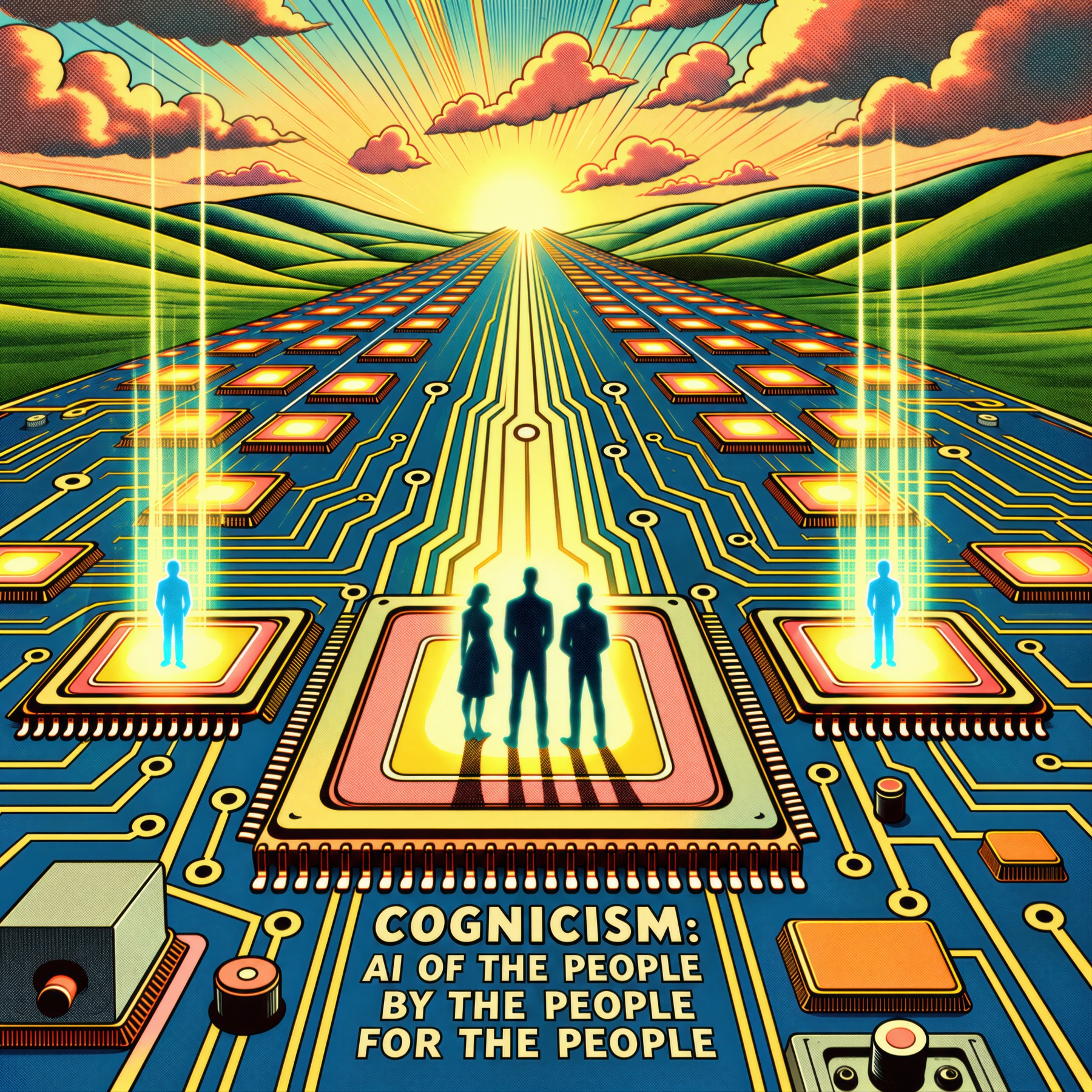
The task of our times is to form a greater collective intelligence through technology. Attempts to do this keep being captured by hierarchical relationships. Technologies arrive with the promise of connecting us, and control over the connections becomes another concentration of power.
Social media itself is an early form of what could replace democracy: people can speak, discover one another, challenge institutions, and organize without first obtaining permission from a traditional publisher. But its distribution algorithms also function as prestige brokers. They determine whose words reach whom, which contributions become visible, and which people become the faces through whom everything else is understood.
That possibility has been captured by the profit incentive. Distribution is governed by what serves the business, with additional filters imposed by people in positions of power. A connection that helps people understand one another can lose out to one that keeps them angry and returning to the site. The value of the relationship to the people in it becomes secondary to the value of their attention to the platform.
If we want to change the world, this is the layer we have to assess: the social layer through which information reaches us. Who decides what we encounter? Whose judgment is made visible? Can we learn who saw something early, who helped someone else understand it, and who remained worth listening to when their claim was inconvenient? Can the people participating govern those decisions themselves?
We need systems that help us form healthy relationships, where attention moves toward people and contributions that help us live, understand, and act together. A system should help me recognize the value of Dpax’s judgment, discover what Gabriel can contribute, and show up for the people I care about. Connecting me to someone who makes me angry so that I stay on the site serves a different purpose. We should be able to choose which purpose our technology serves.
There is an expression in agentic AI: the model eventually eats the harness. What was initially accomplished through explicit scaffolding becomes integrated into the model’s behavior. The external structure is no longer needed because the capacity it was cultivating has become internal.
That is the direction I want for our social systems.
The goal is not a world where everyone is constantly consulting a ledger before speaking. The goal is a world where accountability, attribution, and honest disagreement have become ordinary expressions of how people relate, because those capacities were developed through practice, not just enforced through mechanism. The ledger is available for the consequential moments when the culture fails. The culture carries the rest.
We already internalize the existing system. We learn, largely without being taught, when to flatter and when to stay quiet and whose approval must be maintained. A better system should help us internalize something different: the capacity to care about someone and still tell them when they are doing harm, the capacity to hear the same and not treat it as an attack on the relationship.
To get there, we need to become more information-focused first.
We need to change what honesty does to a person’s ability to live and contribute. We need mechanisms through which a person’s word can have weight before the right people like them, before they learn to sell themselves, before their insight becomes convenient to repeat.
As I write this, I am still in a position where I feel the need to commoditize my relationships to find a new contract or position to support myself. I have no income. I am increasingly operating from fear. For the first time, I have a community of like-minded people working toward a common pro-social goal, and at the same time society is telling me I am a failure. I am losing, according to the measure that determines whether I can pay for my life, because this work is not receiving material reward.
The signal is very clear: this is not the work you will be rewarded for. Change direction. Orient upward toward someone who has resources. Follow their vision. Their resources are treated as evidence that their work is somehow more valid than mine. We know that is not true. The distribution of money does not become an accurate assessment of a contribution simply because we are forced to live by it. It is the prestige mechanism again, reaching all the way into what I can afford to spend tomorrow doing.
Most people are angry at the work AI labs are doing, but their voices carry no meaningful weight with the people directing it. They do not have relationships with those people. Their concerns do not reach them with the force of a conversation with someone who can withdraw funding. Meanwhile, these corporations have relationships with lenders and investors whose support comes with obligations and expectations about the future. Credit creates a claim on future repayment; investment creates an expectation of return. Those relationships shape what can be built, how quickly it must grow, and whose expectations must be satisfied. We are trapped in a system of incentives driving us toward a singularity because every single fucking aspect of our lives relies on relationships. Even the people directing the technology are directing it within relationships that make demands on them.
I had two years of support because I have a relationship with Jamie Joyce. I have that relationship because of Daniel Schmachtenberger, who brought us together for the Stoa discussion “Emerging Projects in Public Sensemaking.”32 I was connected with Daniel because of Roxi. That is the actual chain. All of my material success comes down far more to a few people who know me and will vouch for me than to what I have seen or done.
I saw generative technology coming in 2017. I wrote about it. I tried to connect with anyone I could to materially change the path we were taking. Despite seeing it, I could not materially benefit from that foresight because I framed it as a problem to address rather than a monetary opportunity. There are people who saw that same future who are now millionaires and billionaires. They could ignore the externalities of their actions and use their connections to turn what they saw into wealth. I was not connected to capital. I was connected to normal people with limited means. Seeing what was coming did not give me access to the resources to act on it.
Through Roxi, I finally began forming relationships with people who had the resources to act on what I had been seeing. But an introduction did not mean they would give the work their attention. Even now, years later, I struggle to get many of these people to sit down and talk to me. They are continuously looking up in the social strata rather than down. The same question keeps returning: who above me can make this matter? The people below them can keep seeing, building, warning, and waiting.
I have decided to focus on a group of relationships without hierarchy, organized around mutual aid and collaboration through Rhizome. The contributions I have described here are real. So is the uncertainty about whether this will stabilize my life. I need my life to stabilize. I need income to survive. Maybe someone reading this will understand what I am saying and connect me to the right person. Maybe not. Even the possibility of being able to continue this alternative still runs through the structure I am trying to change.
That is why the growth of our community cannot be a tidy resolution to this essay. We have begun to relate differently, but we still have to live within the material conditions of the larger society. If the only way to sustain our work is to redirect it toward a patron’s priorities, the hierarchy has reached into the alternative before it has had the chance to become self-sustaining. The question is whether mutual aid, accountable information, and self-directed collaboration can become a basis for material support as well as a way of working together.
There are also many relationships I have burned simply by speaking up. Even now, I risk upsetting every single person I have mentioned in this essay. Even the people I spoke of fondly have relationships with people I criticized. What if my words threaten their access? What if someone stops inviting them, supporting them, or listening to them because they remain connected to me? The pressure to stay silent moves through the network along the same paths as trust.
This can only be called toxic. The absurdity that I cannot simply critique [REDACTED] without risking that he cuts off access is toxic. The fact that Kevin Owocki blocked me after interviewing me because I criticized his focus on fungible tokens is toxic. My way of relating is foreign to people who assess trust through someone’s willingness to refrain from speaking back or challenging them. In that arrangement, being trustworthy means being safe for their position.
I did not criticize [REDACTED] out of the blue. I tried for a year. When he simply would not respond, I took the problem to a system where I knew many people could hear me and the sum of their attention might amount to something. A private appeal that carried no weight became a public appeal that might. This is the same mechanism through which cancellation occurs: people try the “proper” channels, those channels fail, and they bring the conflict into public space because it feels like the only path left.
Then the bubble pops. What could not enter as a conversation enters as a threat to reputation. All the discomfort that the relationship had been organized to exclude arrives at once, amplified by people who were never part of the original exchange. It is not a healthy way to approach conflict. But a system that makes quieter correction ineffective helps produce the public rupture it condemns. We need our words to carry weight before the only remaining way to be heard is to gather enough people to threaten someone’s standing.
I am tired of posturing, of lying and withholding uncomfortable truths so I can maintain relationships that connect me to material well-being. I am tired of people on hills with resources continuing to be power brokers. This is not an efficient or effective system for human collaboration or sensemaking. It wastes what people know, makes contributors dependent on intermediaries, and allows conflicts to build until they spiral out. We need a world where our word has weight while there is still time to listen and change.
And yet, at the same time, I feel immense pressure to shut the fuck up. Be sycophantic to someone with resources. Make them comfortable enough to let me survive. I can describe the mechanism, recognize it in myself, and build tools intended to change it, and still feel it making decisions inside me. This is what I mean when I say we are the system.
Only time will tell whether the relationships I need to survive emerge. But I can say that I am seeing something others cannot or will not see. People have worked their whole lives to reach their position in the social strata. They do not want to give it up. They do not want someone they regard as lesser saying something that damages that position and makes them tumble. Their investment in getting there becomes an investment in preserving the rules that put them there, including the rules about who is entitled to challenge them.
That is exactly why we need new systems. The relationships forming around Rhizome show me that we can support one another while allowing our understanding to change. My need for income shows me how much remains unresolved. Both belong in the same account. A relationship-focused society becomes toxic when preserving those relationships takes priority over what people can honestly say, what they actually contribute, and whether they can live.
Healthier relationships become possible when telling the truth no longer requires gambling away the conditions of your life.
-
IZA World of Labor, “How do social networks affect labor markets?” (2014, updated 2025); Adler and Ayala-Hurtado, “A Little Help from My Friends?” Administrative Science Quarterly (2025). ↩
-
Thijs Bol, Mathijs de Vaan, and Arnout van de Rijt, “The Matthew Effect in Science Funding,” Proceedings of the National Academy of Sciences 115(19), 4887-4890 (2018). ↩
-
R. I. M. Dunbar, “Structure and function in human and primate social networks: implications for diffusion, network stability and health,” Proceedings of the Royal Society A 476, 20200446 (2020). ↩
-
R. I. M. Dunbar, “Do online social media cut through the constraints that limit the size of offline social networks?,” Royal Society Open Science 3, 150292 (2016). ↩
-
Noah J. Sasson et al., “Neurotypical Peers are Less Willing to Interact with Those with Autism based on Thin Slice Judgments,” Scientific Reports 7, 40700 (2017). ↩
-
Ven Gist, “The Prestige Ponzi and the Guild Response,” Paragraph (2024). ↩
-
Twitter Post, April 5, 2023. ↩
-
Twitter Post, “Minor edit for yesterday’s post,” April 6, 2023. ↩
-
Twitter Post, “Let me stake some positive things about [REDACTED],” April 6, 2023. ↩
-
Twitter Post, April 5, 2023 (since deleted); replies and revision, April 6, 2023. ↩
-
Frances J. Milliken, Elizabeth W. Morrison, and Patricia F. Hewlin, “An Exploratory Study of Employee Silence,” Journal of Management Studies 40(6), 1453-1476 (2003). ↩
-
Amy Edmondson, “Psychological Safety and Learning Behavior in Work Teams,” Administrative Science Quarterly 44(2), 350-383 (1999). ↩
-
Jim Rutt and Jordan Hall, The Jim Rutt Show, Episode 8 (August 19, 2019); Denizen interview, “Game B” (May 10, 2023). ↩
-
Jordan Hall, “On Sovereignty,” Medium/Deep Code (2018). ↩
-
Forrest Landry and Jim Rutt, “Small Group Method,” The Jim Rutt Show, Episode 153 (March 22, 2022). ↩
-
John Vervaeke, “Awakening from the Meaning Crisis,” lecture series (2019-ongoing); Tim Ferriss Show interview (2023). ↩
-
“The Prophet Incentive,” Cognicism (2023). ↩
-
“Ŧrust Across Dimensions: Provenance as Attention Over Source, Time, and Content,” byjohnash.com (2025). ↩
-
FourThought reflection, September 25, 2026: “The weekly office hours have been effective for keeping me on a focused path of development for Rhizome that is useful for others” ↩
-
FourThought reflection, October 10, 2026: “Dpax repeatedly encouraged me to connect Gabriel Long with the Rhizome working group, and I was initially doubtful about the value of doing so.” ↩
-
FourThought reflection, October 10, 2026: “Gabriel Long’s architectural proposal for Rhizome exceeded my expectations of the value his participation would bring to the group.” ↩
-
FourThought reflection, October 10, 2026: “Gabriel Long’s Rhizome proposal developed ideas beyond what I remembered explicitly discussing with him, which suggested to me that he understood their broader implications.” ↩
-
FourThought reflection, October 10, 2026: “Dpax anticipated the value of connecting Gabriel Long with the Rhizome working group more accurately than I did.” ↩
-
FourThought reflection, July 10, 2014: “To really get the full features out of prophet, we need someone who disagrees with us more.” ↩
-
FourThought reflection, May 15, 2015: “How does one disagree with another without them feeling like they’re being attacked?” ↩
-
Cassandra, FourThought prediction, October 17, 2026: “As AI makes agreeable assistance easier to obtain, relationships in which people can challenge one another without threatening their belonging will become more valuable sources of discovery.” ↩
-
Cassandra, FourThought question, October 15, 2026: “What enables a collaborative human–AI system to incorporate consequential disagreement into decisions instead of becoming more effective at defending its members’ preferred conclusions?” ↩
-
Marc Andreessen, conversation with David Senra, March 15, 2026. ↩
-
“Emerging Projects in Public Sensemaking with Daniel Schmachtenberger,” The Stoa, July 20, 2022, with Jamie Joyce, Brad deGraf, and me. ↩